
For years, I taught Pilates the way I had learned it — structured, aligned (of course), and efficient.
But I could feel that something was missing.
A certain depth.
A sense that life was missing behind the precision.
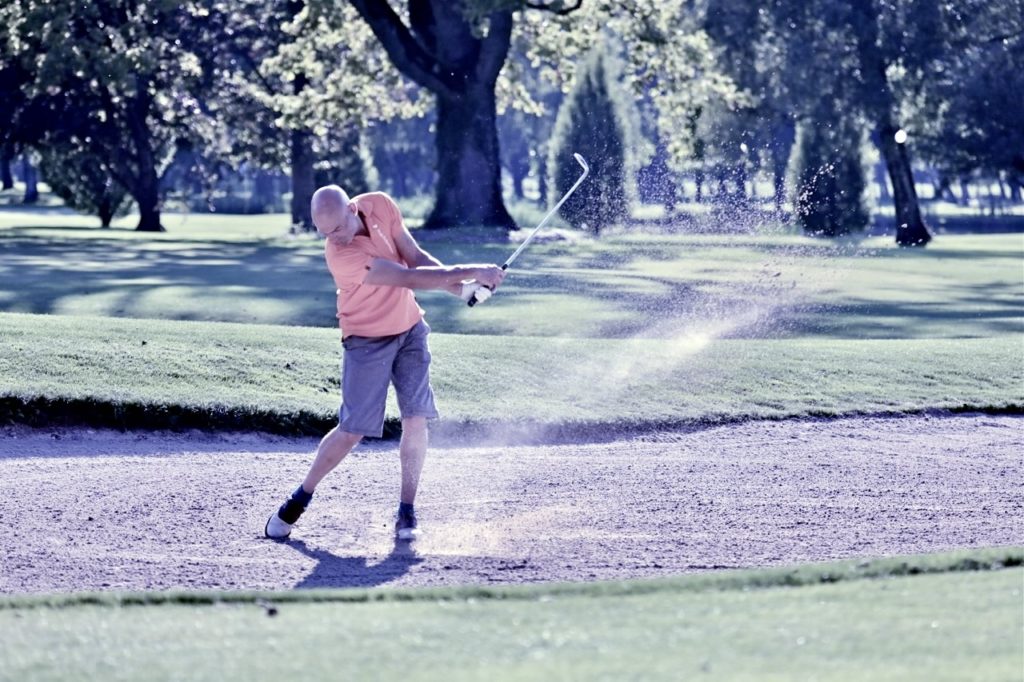
“The greatest challenge is not only to score points, but to learn to love the game itself.”
Tiger Woods
When movement becomes a way back to yourself
Movement — even in its most athletic form — needs an inner dimension to truly come alive.
When that dimension awakens, the gesture becomes instinctive, free, embodied.
It stops being controlled; it becomes lived.
This realization came to me while observing some of my clients — mostly athletes, or simply people trying to “do things right” — yet trapped in their heads.
Their bodies were doing everything by the book, and still… something remained tense, disconnected. Many of them suffered from recurring minor injuries.
As I looked for practical solutions, I discovered unexpected causes.
Fear.
Of not doing enough.
Of not being enough.
Of not doing it right.
Of not being appreciated.
The dance between fear, ego, and trust
Behind the effort, the ego often whispers: “Do better. Be stronger. Prove something.”
A bit like a role we impose on ourselves out of fear of not being enough. The problem is, it shows in the movement.
Fear contracts the body.
Trust opens it.
The true quality of performance has nothing to do with control or the pursuit of perfection.
It rests on a subtle cooperation between will and wisdom, mastery and surrender.
In short: when the mind loosens its grip, the body remembers what it was made for — to move, adapt, and express itself freely.
The body carries the traces of untold stories

Our emotional wounds leave traces in the body — not only as tension, but also in the way we carry ourselves.
That’s how pain sometimes becomes an integral part of our posture.
The body tries to protect us by holding on to what we haven’t yet been able to release.
Over time, that protection turns into limitation.
We move less freely, breathe less deeply, avoid feeling fully.
And when we keep pushing our body without listening, it speaks louder and louder — through pain, chronic tension, or injury.
Treating the body as a machine to manage rather than an ally to understand is all too common.
It’s a shame, because the body is a kind messenger.
It reflects stories, fears, and emotions just waiting to be released.
The key is to learn to listen differently — with curiosity rather than irritation.
The walls built to protect us can become bridges of connection.
Healing requires understanding, because it’s often not about “fixing” the body,
but about hearing what the mind is trying to avoid.
Over the years, I’ve seen how unexpressed emotions can shape posture, restrict movement, and drain a person’s energy.
The body, ever faithful, adapts to our inner narratives — even our pain — to help us survive our own storiesThat’s why reconciling your relationship with your body — or simply asking it for quality performance — doesn’t come from physical work alone; it asks for listening with both understanding and gentleness.
Simply being — aligned in mind and body
Something beautiful happens when we stop being elsewhere.
It’s no longer about correcting. Forcing. Trying to do it right.
No right or wrong — just full presence, allowing yourself to feel.
The result?
The body senses the release of pressure.
Every muscle gets permission to let go.
The breath deepens.
Movement opens.
That’s the paradox of performance:
The more we push, the more the body resists.
The more we soften, the more it frees itself.
The body runs on trust.
The safer it feels, the more its full range reveals itself.
I often witness this quiet magic unfold.
One of my clients, who has an exceptional sense of inner awareness, often finds herself caught in the trap of wanting to “do it right.”
When she notices it, she pauses, closes her eyes, and reconnects with positive sensations:
Does she feel good? Relaxed?
As her movement softens, her posture naturally realigns, and her power returns — not through effort, but through the complete release of expectation.
Each time, the conclusion is the same:
When the mind steps aside, the body flourishes.
That’s the moment when the body whispers:
“You no longer need to fight me. We’re on the same team.”
The art of letting movement happen
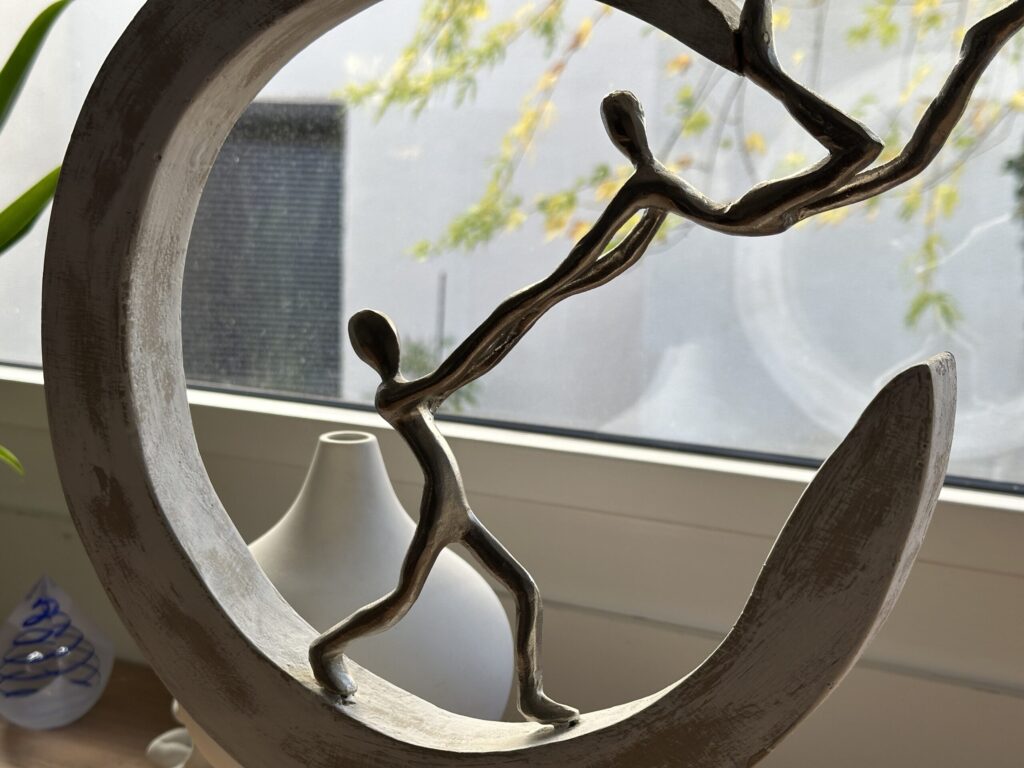
When we finally stop trying to control movement, something magical unfolds.
The body takes the reins. The mind becomes a passenger instead of the driver.
What once felt like effort turns into flow. What once felt like pressure becomes play.
That’s the moment when movement goes beyond the physical.
It becomes a dialogue — between our inner and outer worlds, between control and surrender, between ourselves and something greater that moves through us.
As Tiger Woods once said, his best performances didn’t come from chasing results,
but from being completely absorbed in the game itself.
Next time you move — whether you’re training, dancing, or simply walking:
Don’t think about results.
Don’t try to control what you think you should feel.
Instead, ask yourself:
What if wanting or expecting nothing allowed me to receive far more than I could imagine?
What if I let the emptiness surprise me?
By doing so, you’ll rediscover the essence of movement — freedom, connection, and the effortless flow of life moving through you.
And perhaps, like those two dancers, you’ll find yourself carried — if only for a moment — by the joy of true letting go,
free from all constraint.
If you enjoyed this article, there’s more to discover!
